
 PODCAST


That's why Deaf Interpreters (DI) are so important: they're specialists who, as members of the Deaf community themselves, have a level of fluency and cultural understanding that enhances the overall interpreting experience for everyone.
"When you grow up in a Deaf household, you learn slang and cultural things that a hearing ASL interpreter might not pick up on," signs Deaf and Hard of Hearing Director Heather Niedbala. "Interpretation isn't a one-size-fits-all situation, and we're looking to change the standard by getting more Deaf Interpreters to work alongside our hearing interpreters."
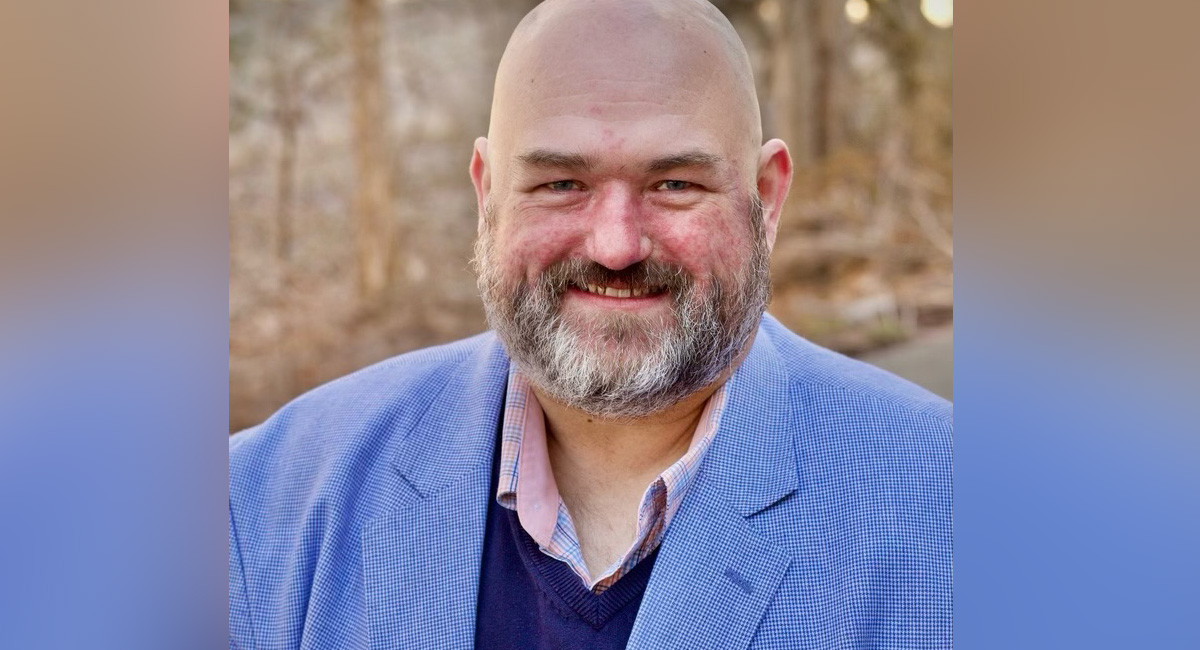
"We're looking to change the standard by getting more Deaf Interpreters to work alongside our hearing interpreters."One of the Deaf interpreters to come aboard recently is Andrew Veith, who has been working professionally in interpreting services since 2006 for Deaf/Blind communities in medical and legal settings. He used his training and expertise to make sure that, no matter one's ASL abilities, backgrounds, or other needs, they received clear and easily digestible information about the important matters he was called in to interpret. While working as a freelance interpreter, he came in contact with Heather in 2017--and when he got the opportunity to work for Perspectives, he was glad to come aboard and work with the ASL Interpreting team, where our professionals are united in a mission to bring accessible communication to all.
"The Perspective ASL team is fantastic," Andrew signs. "I freelanced with them before, and I loved working with them; I'm excited to officially join the team and be a part of helping people in the community get full access to communication, with hearing and Deaf interpreting."
That full access is critical, as with all languages, interpretation can vary depending on the skills of all parties. Especially with cases of language deprivation, where Deaf people are forced to learn to read lips or don't have the opportunity to learn ASL, it becomes all the more crucial to have Deaf Interpreters like Andrew there to fill in what someone may have difficulty expressing. In other cases, an individual might simply struggle with expressing themselves, in which case it becomes crucial to have a culturally informed and fluent professional there to keep communication smooth, using classifiers in ASL to explain and expand on complicated topics in more detail. The added detail Deaf interpreters can provide make it easier for individuals to understand complex topics that are difficult to explain when ASL isn't one's first language.
"In the past, interpreters had to rely a lot on finger-spelling for complex medical terminology, and use of classifiers wasn't as common despite it being a big part of Deaf culture," Heather signs. "It can and has caused problems for Deaf people, who don't get the full communication to understand the gravity of their situation."
The work hearing interpreters do is invaluable as the Deaf and Hard of Hearing community and other hearing communities come together--and with the expertise, fluency, and native understanding of Deaf culture and ASL that Deaf Interpreters provide, their teamwork creates an unmatched quality of communication access for all parties. Such teamwork shows a commitment to the integrity of Deaf people's messages, a respect for the culture their language springs from, and a vision of seeing a world more accessible to Deaf communities that pushes the whole network of ASL Interpreters to continue improving. We're excited to have professionals like Andrew join the team, and for the opportunity to broaden access to communication across Rhode Island--and we can't wait to see what the future holds!